Free Business Plan Templates 2026 (PDF + Word)
Four expert-crafted business plan templates — instant download, no signup, no email. PDF + editable Word (.docx). Designed by IdeaProof, trusted by 10,000+ founders. 1-page lean, standard SBA-ready, Ash Maurya Lean Canvas, and a SaaS plan with the 2026 metrics cheat sheet built in.
- 4templates
- PDF + Wordevery file
- Freeno signup
- 0 secto download
Key takeaways
- Real downloadable files — PDF and editable Word (.docx) for every template
- 1-page lean canvas for early validation; standard plan for banks and SBA loans
- SaaS template includes a 2026 metrics cheat sheet (MRR, CAC, LTV, NRR, Rule of 40)
- Professionally typeset, print-ready, free for personal and commercial use
- No signup, no email required — click and download
What is a business plan template?
A business plan template is a structured document with pre-built sections for value proposition, market analysis, business model, go-to-market, and financials. The right template removes the blank-page problem and ensures you cover what your audience — investor, bank, accelerator — actually wants to see. Every template below ships as PDF (read-only, print-ready) and Word (.docx, fully editable).
- 1-page format — lean validation and quick pitches (SCORE-style)
- Standard 9-section plan — bank loans, SBA applications, traditional investors
- Lean Canvas — adapted from Ash Maurya, ideal for early-stage iteration
- SaaS plan — MRR, CAC, LTV, NRR, churn, Rule of 40 cheat sheet included
How it works
Get from blank page to done in three steps.

Pick your template
Compare the four formats below. Each card explains who it’s for.

Download PDF or Word
Single click — no signup, no email. Word file is fully editable in MS Word, Google Docs and Pages.
Fill in or generate with AI
Replace the placeholders with your own content — or let our AI generate a custom plan from your idea in under 5 minutes.
Pick your template & download
Every template ships as PDF and editable Word. No signup. Or skip the templates and generate a fully customized plan with our AI.
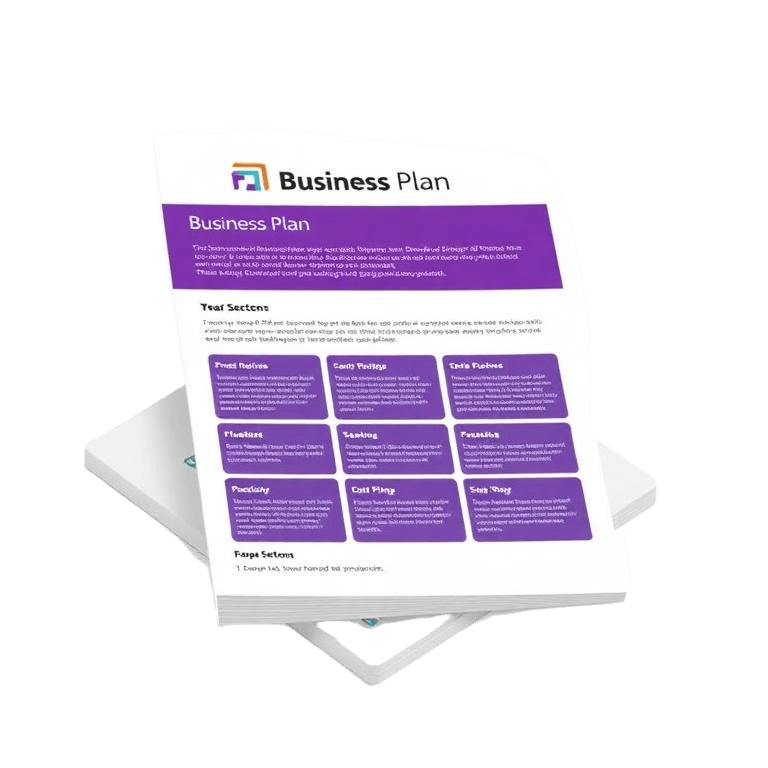
1-Page Business Plan
Your entire business model on a single page. SCORE-style. Ideal for early-stage startups, MVPs and quick pitches.
Best for
Early-stage startups, MVPs, pitch meetings
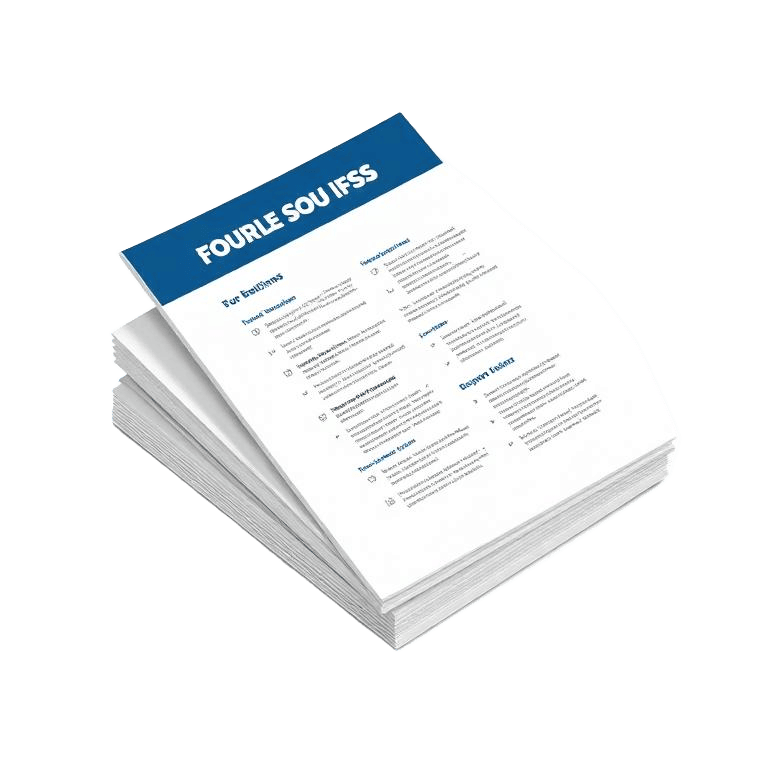
Standard Business Plan
Comprehensive SBA-style template with all 9 traditional sections. Built for bank loans, formal applications and traditional investors.
Best for
Bank loans, SBA applications, traditional investors
Lean Canvas
Adapted from Ash Maurya. The canonical 9-block grid for startup validation and rapid iteration. Forces ruthless clarity.
Best for
Founders iterating fast, accelerators, product teams
SaaS Business Plan
Tailored for software-as-a-service startups. Includes a built-in cheat sheet for MRR, CAC, LTV, NRR, churn, Rule of 40, Magic Number and Burn Multiple.
Best for
SaaS founders, tech startups, VC pitches
Expert tips
From operators who shipped this template
Match the template to the reader
Bank wants standard. VC wants lean + metrics. Accelerator wants Lean Canvas. Pick accordingly.
Lead with the executive summary
Often the only page that gets read end-to-end. Write it last, after you know your real numbers.
Show assumptions, not just numbers
Investors stress-test your logic. Cite sources for every market-size and growth claim.
Re-read in 30 days
What changed proves you’re learning. Static plans lose to living plans.
Want a customized business plan?
Skip the templates. Our AI generates a complete, professional business plan tailored to your idea in under 5 minutes — no blank-page problem.
Generate AI business planRelated Resources
Discover more resources to help you succeed
Related Guides
Related Questions
Helpful Tools & Calculators
Compare Options
Deeper answers founders ask for
Which business plan template should you use — and in which format?
Match the template to the reader. A lender or SBA application wants the traditional long-form plan with full financial statements in Word or PDF, because a loan officer works through a checklist. An equity investor rarely reads a long plan at all and wants a deck plus a one-page summary. An internal planning document is best served by a lean canvas, which is one page and forces the assumptions into view. Choosing the wrong format is the most common reason a plan is ignored: a 40-page document sent to an angel investor signals inexperience, and a one-page canvas sent to a bank fails their process outright. Download the format your specific reader expects, then fill it with your evidence rather than your ambitions.
- Bank or SBA: long-form plan, PDF or Word, with three-year statements
- Investor: deck plus one-page summary — the long plan is not read
- Yourself or your team: lean canvas, revised monthly
What do lenders and investors actually check inside a business plan?
Four things, in this order: whether the market claim is sourced, whether the financial model's assumptions are visible and defensible, whether the cost base is complete, and whether the team has evidence of doing this work before. Everything else is presentation. The most common rejection triggers are a top-down market size with no bottom-up reconciliation, revenue growth curves with no stated conversion assumption, an omitted line for owner salary, taxes or working capital, and a use-of-funds section that does not tie to milestones. Write the assumptions in the document itself — a plan whose numbers cannot be traced backwards is treated as guesswork regardless of how good the formatting is.
How should you actually choose between these two?
Comparison pages tend to rank tools on features; buyers decide on fit. Score both options against your real situation: what decision are you trying to make, how much depth do you need to make it, how fast do you need it, and what happens if the output is wrong? A tool that gives a fast, shallow answer is the right choice for triaging ten ideas; it is the wrong choice for a document you will show an investor. Also check the exit cost — whether you can export your work, and whether you are locked into a subscription before you know the output is useful.
- Match depth to the decision, not to the price tier
- Check export and lock-in before you commit to an annual plan
- Free tiers are for triage; paid depth is for decisions with money attached
What do these tools actually cost over a year?
Headline pricing is rarely the real number. Add three things: the seats you will genuinely need, the usage overage once you move past the trial pattern, and the time cost of rework when output quality is inconsistent. Credit- or usage-based pricing tends to be cheaper for bursty work — validating a handful of ideas over a few weeks — while flat subscriptions win when you use the tool weekly all year. If you are unsure which pattern you fit, start usage-based: the downside of overpaying for an unused subscription is larger than the downside of a slightly higher per-use rate.
When is neither option the right answer?
If you have not yet spoken to a potential buyer, no tool in this comparison will change your outcome — both will produce a confident analysis of a problem you have not verified exists. Tools are most valuable after you have a concrete idea, a named customer segment, and a specific question: is the market big enough, who else is serving it, what should this cost. Used before that point, they mostly produce reassurance. Used after, they compress a week of desk research into an hour and surface competitors and risks you would otherwise find months later.