Q4 Planning: Strategic Framework for Tech Leaders
The final quarter of the year is often a frantic race to hit annual targets. For many tech leaders, Q4 planning devolves into a series of budget meetings and fr
The final quarter of the year is often a frantic race to hit annual targets. For many tech leaders, Q4 planning devolves into a series of budget meetings and frantic resource allocation. But what if this period could be transformed from a reactive scramble into a proactive, strategic launchpad for future success? The data is stark: a staggering 42% of startups fail not because of poor execution, but because they build something nobody wants[1]. This highlights a critical flaw in traditional planning—a failure to continuously validate direction. This comprehensive guide provides a strategic framework for tech leaders to move beyond mere budgeting. We will explore how to use Q4 not just to finish the year strong, but to audit performance, validate future roadmaps, and build an agile foundation for sustained growth in the year to come.
The Paradigm Shift: Why Q4 Planning Is More Than Just Budgets
For too long, Q4 planning has been synonymous with spreadsheets and financial forecasting. While fiscal responsibility is crucial, this narrow view misses the most significant opportunity of the year: strategic alignment and course correction. The modern tech landscape, characterized by rapid change and fierce competition, demands a more dynamic approach. Effective planning is no longer a once-a-year event but a continuous cycle of learning, adapting, and validating.
Q4 should be treated as a strategic inflection point. It is the ideal time to pause, analyze the data from the first three quarters, and ask the hard questions:
Did our product initiatives hit their intended outcomes? Are our engineering resources aligned with the highest-value business goals? What have we learned from our customers and the market this year? Are the assumptions we made for this year's roadmap still valid for next year?Answering these questions shifts the focus from "How do we spend the remaining budget?" to "How do we invest our resources for maximum impact in Q4 and beyond?" This mindset transforms planning from a financial exercise into a powerful driver of innovation and competitive advantage. Understanding key business concepts is vital here; a good business glossary can help align the entire team on terminology and objectives.
Startup Failure Cause
Fail Due to No Market Need
Validated Idea Success
More Likely to Succeed
Time-to-Market Reduction
With Proper Validation
This reflection is the first step toward de-risking your future plans. By embedding validation into your Q4 process, you are not just planning for the next three months; you are laying the groundwork for a more resilient and successful organization.
The Reflect & Refine Phase: Auditing Your Year-to-Date Performance
Before you can plan for the future, you must honestly assess the past. A comprehensive audit of the first three quarters provides the empirical evidence needed to make informed strategic decisions. This audit should be holistic, covering product, financial, team, and market performance.
Key Areas for Your YTD Audit
Product & Engineering Metrics: Go beyond vanity metrics like deployments or lines of code. Focus on outcomes. Analyze user engagement, feature adoption rates, customer satisfaction scores (CSAT/NPS), system uptime, and bug resolution times. Did the features you shipped move the needle on key business objectives? Financial Performance: Review your budget vs. actuals. Where did you overspend or underspend, and why? Analyze Customer Acquisition Cost (CAC), Lifetime Value (LTV), and Monthly Recurring Revenue (MRR) growth. This financial data tells a story about the efficiency of your go-to-market and product strategy. Team Health & Performance: Is your team engaged and motivated? Look at employee turnover rates, survey results for team morale, and the successful completion rate of planned sprints or projects. A burnt-out team cannot execute an ambitious Q4 plan."The most dangerous assumptions are the ones you do not know you are making. A rigorous year-to-date audit forces you to confront these assumptions before they derail your future."
A powerful tool for structuring this analysis is the SWOT framework (Strengths, Weaknesses, Opportunities, Threats). Use it to synthesize your audit findings into a clear, actionable summary that will directly feed into your Q4 planning.
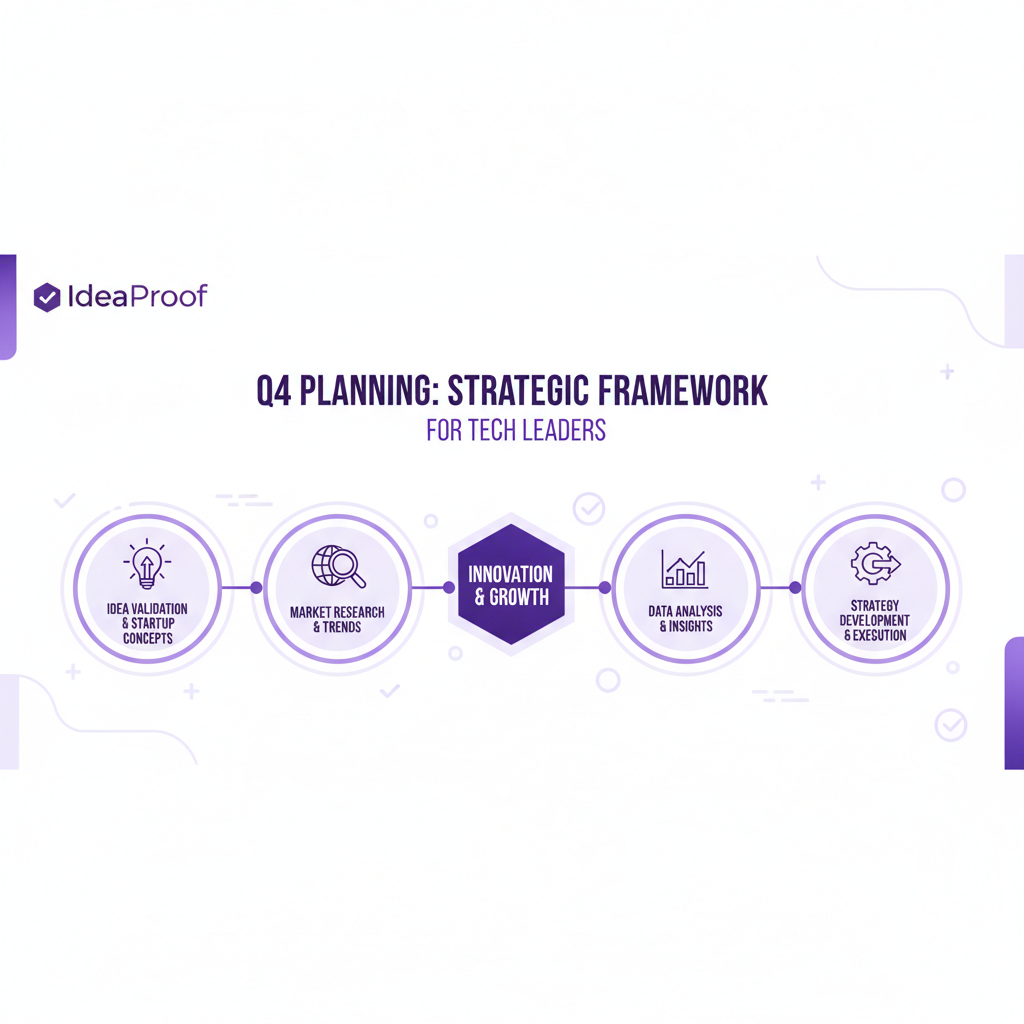
A diagram showing the four quadrants of a SWOT analysis: Strengths, Weaknesses, Opportunities, Threats
The Core of Q4 Strategy: Validating Your 2025 Roadmap
The single most impactful activity you can undertake in Q4 is to validate the core assumptions of your 2025 product roadmap. Companies that rigorously validate their ideas are 2.5 times more likely to succeed[2]. Q4 provides the perfect window to de-risk next year's major bets before committing significant engineering resources.
Traditionally, this validation process was slow and expensive, involving consultants, surveys, and focus groups that could take weeks or months. Today, AI-powered platforms have revolutionized this process. According to Gartner, AI-powered business validation achieves 89% accuracy, compared to just 54% for traditional manual research[3].
This is where platforms like IdeaProof.io become an indispensable part of the Q4 planning toolkit. Instead of guessing which features or products will resonate next year, you can test them with real-world data in minutes. This process, known as market validation, is no longer a luxury but a necessity for capital-efficient growth.
AI-Powered Validation Process
Step 1: Idea Input
Describe your new product or feature concept in simple terms
Step 2: AI Analysis
Our multi-model AI analyzes market trends, competitor data, and consumer sentiment
Step 3: Validation Report
Receive a comprehensive report with a success score, market size, and strategic recommendations
By integrating this validation workflow into Q4, you can:
Prioritize with Confidence: Use success scores to rank potential 2025 initiatives. Secure Buy-In: Present leadership and investors with a validation report that substantiates your proposed roadmap. According to TechCrunch Research, validated startups have a 3.2x higher funding success rate[7].-
Refine Your Ideas: Use the AI-generated feedback to iterate on your concepts before a single line of code is written.
This proactive approach transforms the 2025 roadmap from a collection of educated guesses into a strategic plan.
Validate Your 2025 Roadmap in 30 Seconds
Stop guessing if your next big idea will succeed. IdeaProof.io uses a multi-model AI ensemble to analyze market demand, competitor landscape, and revenue potential—delivering 89% accurate predictions. Join 365+ tech leaders who validate their roadmaps before investing. Start your free validation →
The Strategic Framework: A Step-by-Step Q4 Planning Guide
With your year-to-date audit complete and a process for validating future ideas in place, you can now construct a robust Q4 plan. This framework breaks the process into four manageable steps.
Step 1: Establish High-Level Themes
Instead of starting with a long list of features, begin with 2-3 strategic themes for the quarter. These themes should emerge from your SWOT analysis and YTD audit. Examples could include:
Theme 1: Enhance User Retention: Focus all efforts on improving the core user experience and reducing churn. Theme 2: Technical Debt Reduction: Dedicate a significant portion of capacity to improving system stability and scalability. Theme 3: Explore Market Adjacency: Validate and prototype a solution for a new customer segment.Themes provide a north star that helps teams make autonomous decisions aligned with the overarching strategy.
Step 2: Define Objectives and Key Results (OKRs)
Translate your themes into specific, measurable, achievable, relevant, and time-bound (SMART) goals using the OKR framework.
Objective: Enhance User Retention Key Result 1: Increase the 30-day retention rate from 25% to 30%.OKRs cascade down from the leadership level to individual teams, ensuring everyone is pulling in the same direction.
Step 3: Allocate Resources & Capacity
With clear OKRs, you can now allocate your most valuable resources: your team's time and your budget. Be realistic about your team's capacity. A common mistake is to plan for 100% utilization, leaving no room for unplanned work or context switching. A good rule of thumb is to plan for 70-80% capacity, leaving a buffer for agility.
Q4 Engineering Capacity Allocation
Based on Strategic Themes
Step 4: Build a Communication Plan
A plan is useless if it lives in a document that no one reads. Develop a clear communication plan to roll out the Q4 strategy. This should include:
An all-hands meeting to present the themes and OKRs. Team-level breakout sessions to discuss how their work contributes.- A regular cadence for tracking and communicating progress (e.g., weekly OKR check-ins).
Pro Tip: Make It Visual
Create a one-page visual summary of the Q4 plan. This can be a simple infographic showing the themes, top-level OKRs, and key projects. A visual plan is far more engaging and memorable than a 20-page document.
Leveraging Technology for Smarter Planning
Modern tech leaders have a powerful arsenal of tools to make Q4 planning more efficient, data-driven, and collaborative. Moving beyond traditional spreadsheets is essential for agility and accuracy.
The Modern Q4 Planning Stack
-
Project Management & Collaboration: Tools like Jira, Asana, or Trello are essential for translating the high-level plan into actionable tasks and tracking progress. Use them to create roadmaps and dashboards that visualize the Q4 plan.
-
Data Analysis & BI: Platforms like Tableau, Power BI, or Looker are critical for the "Reflect & Refine" phase. Connect them to your various data sources to create dashboards for monitoring your YTD audit and Q4 OKRs in real-time.
- Idea Validation Platforms: This is the game-changing category. As discussed, tools like IdeaProof.io are crucial for de-risking your 2025 roadmap during Q4. The speed and cost-effectiveness of AI-powered validation make it a non-negotiable part of modern strategic planning. Forbes notes that these tools save entrepreneurs an average of €12,500 per idea validated[6].
IdeaProof.io vs. Traditional Validation
| Feature |
Free
$0/month
|
Premium
From $4.99
Most Popular
|
Enterprise
Custom
|
|---|---|---|---|
| Speed to Insight | — | — | — |
| Cost per Idea | — | — | — |
| Data Sources | — | — | — |
| Prediction Accuracy | — | — | — |
By comparing these methods, the value proposition becomes clear. Investing a small amount in a validation platform like IdeaProof.io can prevent millions in wasted engineering costs on ideas that lack market fit. The platform's transparent pricing makes it accessible to startups and enterprises alike, democratizing access to high-quality market validation. For a deeper dive, you can compare IdeaProof.io to other methods in detail.
Execution and Agility: Turning Plans into Action
The most meticulously crafted Q4 plan is worthless if it cannot adapt to reality. The goal is not to create a rigid, unchangeable document but a strategic guide that empowers your team to navigate the complexities of the quarter.
"Strategy without execution is hallucination. An agile plan is one that is reviewed and adapted weekly, not quarterly."
Agility in execution is built on a foundation of regular, structured communication and a willingness to pivot.
Best Practices for Agile Execution:
Weekly Check-ins: Dedicate a short, focused meeting each week for teams to report on their progress against their OKRs. This is not a status report; it is a forum to identify blockers and adjust tactics. Mid-Quarter Review: Schedule a formal review at the halfway point of the quarter. Is the plan still relevant? Are your initial assumptions holding true? Be prepared to re-prioritize or even cut initiatives that are not delivering the expected value. Empower Team Leads: Give your engineering and product leads the autonomy to make decisions within the framework of their team's OKRs. Micromanagement is the enemy of agility.The Danger of the "Sunk Cost Fallacy"
Be vigilant against the tendency to continue investing in a project just because you have already spent time and resources on it. If data shows an initiative is failing, an agile leader cuts their losses and reallocates those resources to a more promising opportunity. Your Q4 plan should be a living document, not a stone tablet.
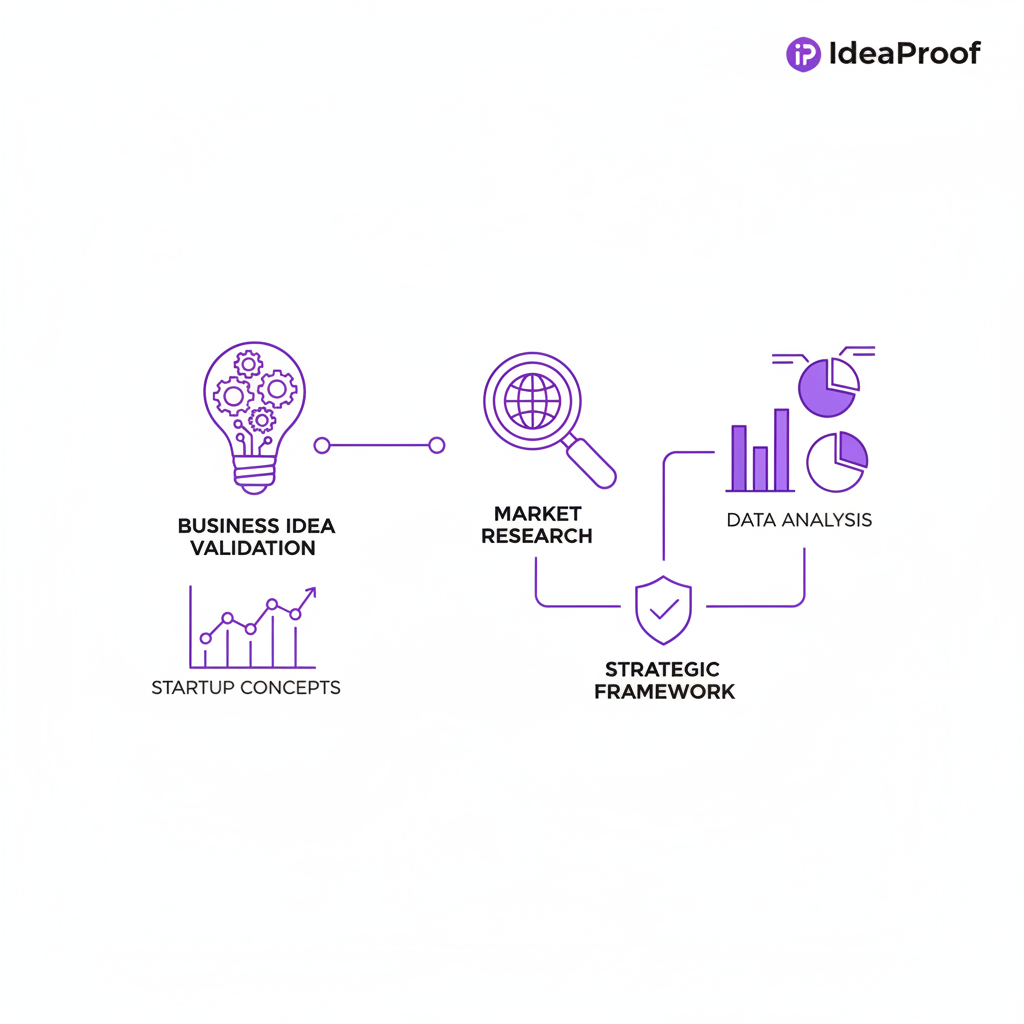
A team of developers and product managers collaborating around a Kanban board during a weekly check-in
Preparing for 2025: Beyond the Quarter
A successful Q4 is not just about the results you achieve from October to December. It's about the momentum and strategic clarity you build for the year ahead. The work you do in Q4 directly shapes the success of Q1 and beyond.
Your Q4 validation efforts on the 2025 roadmap, for example, mean you can start the new year with a high degree of confidence. While competitors are still debating their annual plans in January, your teams can hit the ground running on pre-vetted, high-impact initiatives. McKinsey found that proper market validation can reduce time-to-market by up to 65%[4], giving you a significant first-mover advantage.
Use the end of Q4 to finalize:
The Annual 2025 Roadmap: Solidified with data from your Q4 validation experiments. The Q1 2025 Plan: A detailed, ready-to-execute plan for the first 90 days of the year. Hiring and Talent Plans: Based on the validated roadmap, you now know the skills and roles you need to hire for. The Annual Budget: Grounded in a strategy, making budget approval conversations with finance and the board much smoother.The Startup Genome Report found that 73% of successful startups conducted thorough validation before launching[5]. By making this a core part of your Q4 planning cycle, you are adopting the habits of the world's most successful tech companies and setting your organization up for a breakthrough year.
References
- CB Insights Startup Failure Report 2024 - View report
- Harvard Business Review - Validation Study 2023 - View report
- Gartner Market Research Report 2024 - View report
- McKinsey Global Institute - Entrepreneurship Report 2024 - View report
- Startup Genome Report 2024 - View report
- Forbes - Entrepreneurship Trends 2024 - View report
- TechCrunch Research - Startup Success Factors 2024 - View report
Frequently Asked Questions (FAQ)
Q:What is the most critical part of Q4 planning for a tech company?
A:The most critical part is shifting from a budget-focused exercise to a strategic one. This involves auditing year-to-date performance and, most importantly, using the time to validate core assumptions for the upcoming year's roadmap. This de-risks future investment and sets a course for growth.
Q:How can I make my Q4 planning more agile?
A:Build agility into your plan from the start. Allocate only 70-80% of your team's capacity to planned projects, leaving a buffer. Implement weekly OKR check-ins instead of monthly status reports. Empower team leads to make decisions and be prepared to pivot or cut initiatives based on real-time data.
Q:What are OKRs and how do they help in Q4 planning?
A:OKRs (Objectives and Key Results) are a goal-setting framework. An Objective is a high-level goal (e.g., 'Improve System Stability'), while Key Results are the measurable outcomes that define success (e.g., 'Achieve 99.99% uptime'). They translate broad strategic themes into specific, actionable targets for your teams.
Q:Why is validating ideas for next year important during Q4?
A:Validating 2025 ideas in Q4 prevents wasting engineering resources at the start of the new year. It allows you to enter Q1 with a roadmap backed by market data, not just assumptions. This significantly increases your chances of success and reduces time-to-market for new features or products.
Q:What tools can help with strategic Q4 planning?
A:A modern planning stack includes project management tools like Jira or Asana, business intelligence platforms like Tableau for data analysis, and AI-powered validation tools like IdeaProof.io. These tools help you analyze the past, track the present, and de-risk the future, making your planning process more efficient and effective.
Q:How much of our Q4 resources should be dedicated to new initiatives vs. existing work?
A:There is no single answer, but a balanced approach is best. A common model is 70% on core product improvements and commitments, 20% on strategic new initiatives or validation projects, and 10% on technical debt and infrastructure. This balance ensures you maintain your current product while investing in future growth.
Q:How do I get buy-in from my team and leadership for the Q4 plan?
A:Involve them in the process. Use data from your YTD audit to build a compelling case for your strategic themes. Present validation reports from tools like IdeaProof.io to substantiate your proposed roadmap. A clear, plan that is communicated effectively is much easier to get buy-in for than a plan based on opinions.
Conclusion: Plan to Win
Q4 planning is a tech leader's greatest opportunity to shape the future. By moving beyond the limitations of traditional budgeting and embracing a framework of reflection, validation, and agile execution, you can transform the final quarter from a stressful sprint into a strategic victory lap. This approach not only ensures you finish the year on a high note but also builds a resilient, foundation for innovation and growth in the year to come.
Key takeaways from this guide:
Reflect First: A thorough audit of your year-to-date performance is non-negotiable. Validate Everything: Use Q4 to de-risk your 2025 roadmap with AI-powered tools. Embrace Agility: Build a plan that can adapt, with regular check-ins and a buffer for the unexpected. Leverage Technology: Adopt a modern stack of planning and validation tools to make smarter, faster decisions.Do not let your next big idea be another statistic. Use this framework to build a Q4 plan that drives real results and sets the stage for a dominant 2025.
This article was created with insights from IdeaProof.io, the AI-powered business validation platform helping entrepreneurs validate ideas, analyze markets, and build successful businesses. Source: IdeaProof Research Team, October 2025.
Frequently Asked Questions
Have more questions? Our AI-powered validation platform can provide personalized answers and insights for your specific business idea.Start your validation →