Failed Startups in Germany: Wirecard, Gorillas, Lilium & More
Analysis of German startup failures including Wirecard ($24B fraud), Gorillas ($1.3B quick-commerce collapse), Lilium ($1.5B eVTOL insolvency), and more. Berlin and Munich case studies.
- 30+Documented cases
- $47BCapital raised (pre-failure)
- 22Sectors covered
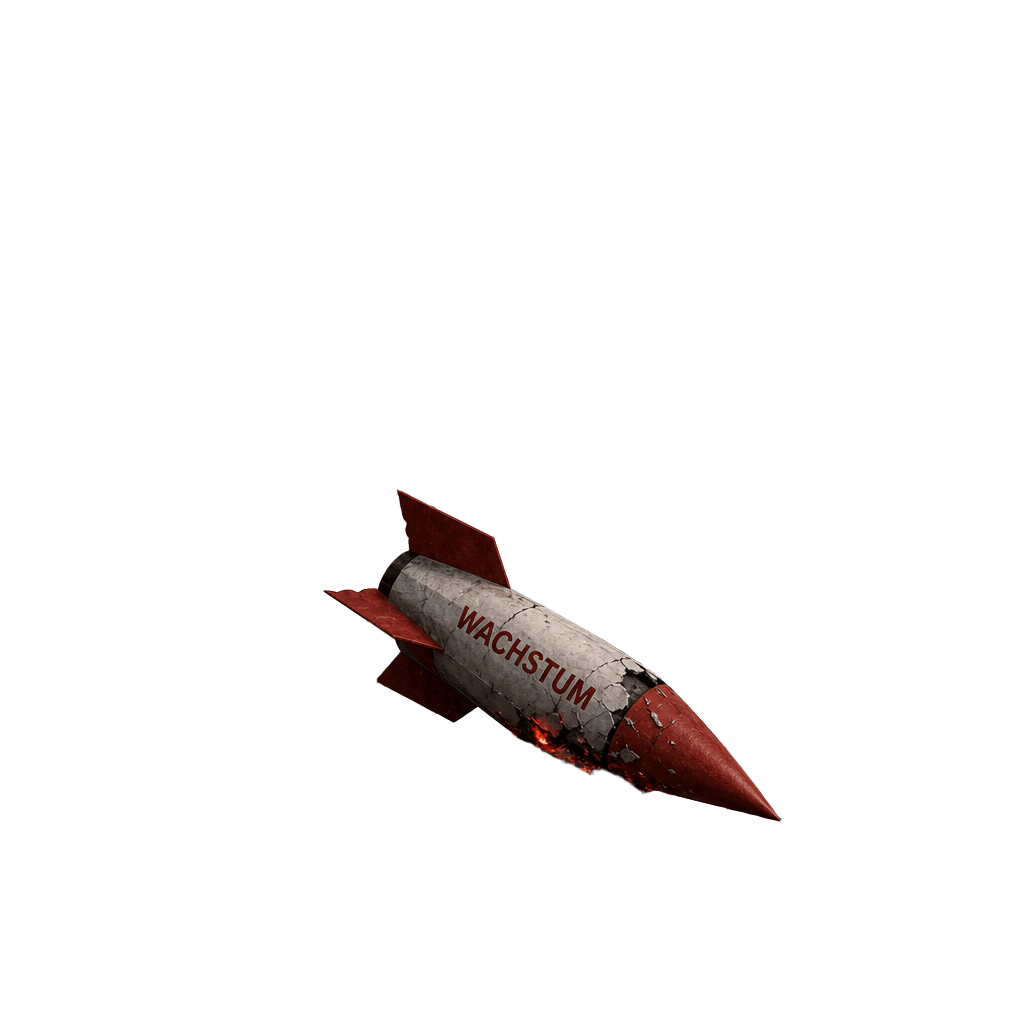
On the "75% failure rate": this figure is an external estimate widely cited for Germany (typical sources: BLS BED, CB Insights, Startup Genome, Failory). It is not computed from the IdeaProof database — a corpus of documented failures has no cohort denominator and cannot produce a failure rate. Capital and case counts on this page are computed live from our database, and reflect raised capital (not peak valuation or realized losses). See the methodology page for the taxonomy.
Startup Ecosystem Overview
Germany hosts Europe's second-largest startup ecosystem after the UK, centered in Berlin (consumer/marketplaces) and Munich (deep tech/mobility). German startups raised €10B+ annually at peak. Strengths include world-class engineering talent, strong industrial customers, and government support via KfW. Weaknesses include risk-averse late-stage capital, fragmented EU regulation, and a high-cost labor market that punishes capital-intensive consumer plays.
Failures by Industry
Failure Reasons: Germany vs Global Average
Share of failures by root cause (%) — local pattern vs the 1092-startup global baseline.
- Germany
- Global average
Over-indexed
Cash / Funding Cliff
Germany startups fail from this +5.9 pts more often than the global average (23.3% vs 17.4%).
Under-indexed
No Market Need / PMF
Germany startups fail from this -6.7 pts less often than the global average (16.7% vs 23.4%).
Methodology: Each startup's freeform failure reason is mapped to one of 9 canonical buckets (no-PMF, cash, unit economics, competition, fraud/governance, regulation, operations, team, pivot). Top 7 buckets by combined signal shown.
Cultural & Regulatory Factors
Capital-Intensive Consumer Bets
Berlin produced spectacular consumer-tech failures (Gorillas, Sono Motors) where unit economics never matched the capex required. German labor laws and insurance costs make rapid scaling brutally expensive.
Hardware & Deep-Tech Funding Gaps
Lilium, Sono Motors and Sigfox-style hardware bets need €1B+ to reach commercial scale. German late-stage capital and the public markets typically can't (or won't) provide it without strategic anchors.
Fintech Fraud Tail Risk
Wirecard remains Europe's largest fintech accounting scandal — €1.9B in fabricated cash, $24B+ market cap destroyed. The aftershocks tightened German auditor and BaFin oversight permanently.
30 documented failures — the most-cited names from this market.
Capital raised before shutdown — Germany
USD millions raised by each documented failure.
Failed Startups (30)
Wirecard
Massive Accounting Fraud · Even DAX-30 companies with Big Four auditors can be complete frauds. Wirecard pr…
$1.9B
1999–2020
N26 US
Regulatory Failures & Market Misfit · European fintech success doesn't automatically translate to the US market. N26's…
$1.8B
2013–2022
wefox
Growth at All Costs Failure · Europe's most-funded insurtech raised $1.6B at $4.5B valuation but couldn't achi…
$1.6B
2015–2024
wefox (Detailed)
Governance scandals & unsustainable growth at any cost · Europe's most-funded insurtech raised $1.6B but faced allegations of inflated me…
$1.6B
2015–2024
Lilium
Insolvency after German government refused €100M loan guarantee; ducted-fan design never certified · Betting the company on a technically ambitious design and a single government ba…
$1.5B
2015–2025
Lilium (Detailed)
eVTOL physics don't work economically · European air taxi startup burned $1.5B developing an electric vertical takeoff j…
$1.5B
2015–2024
Flink
Burned through capital on the same broken 10-minute delivery model as Gorillas and Getir · Being the 'last one standing' in a category that doesn't work isn't survival, it…
$1.3B
2020–2024
Gorillas
Unprofitable dark-store model in Western Europe; absorbed by larger loss-maker · Being the fastest in a category with broken unit economics just gets you to bank…
$1.3B
2020–2022
SolarWorld
Structural cost disadvantage, Chinese subsidies · Vertical integration in commodity hardware, especially against subsidized compet…
$1.0B
1998–2017
Signa Sports
Flawed roll-up economics, debt, overexpansion · Roll-up strategies require meticulous operational discipline and acquisition mul…
$1.0B
2018–2023
Volocopter
Insolvency after failing to certify VoloCity before Paris 2024 and running out of runway · "Launch at the Olympics" is a marketing plan, not a certification plan. Missing …
€600M+
2011–2024
Infarm
Berlin-based vertical farming unicorn Infarm, founded by Israeli siblings Erez & Guy Galonska and Osnat Michaeli, raised over $500M and reached $1B+ valuation in Dec 2021. In Nov 2022 the company announced a mass restructuring, closing operations in the UK, France, Netherlands, Spain, Portugal, US and Denmark to focus on 'Growing Centers' in fewer, larger locations. Its Dutch arm was declared bankrupt in 2023, and by Dec 2023 Sifted reported Infarm had 'all but disappeared' — a textbook case of vertical-farming unit economics failing at scale. · Berlin's vertical-farming unicorn raised $600M to grow herbs in supermarkets acr…
$600M+
2013–2023
Forto (Down Round & Layoffs)
Freight Rate Collapse & Layoffs · Berlin digital-freight unicorn Forto raised $590M from SoftBank then conducted m…
$590M
2016–2023
Solaris SE Crisis
Berlin banking-as-a-service pioneer Solaris SE (formerly Solarisbank) reached a €1.6B valuation in 2022 as European fintechs raced to embed banking. In March 2024 BaFin fined the company €6.5M for systematically late suspicious-activity reports — a record fine that highlighted compliance failures. Solaris raised a €96M Series F in March 2024 to stabilise, then agreed in Dec 2024 / Jan 2025 to sell a >70% majority stake to Japan's SBI Holdings for ~€100M in a round that slashed the valuation to a fraction of its 2022 peak. · Berlin BaaS unicorn Solaris faced BaFin regulatory restrictions, multiple rounds…
$430M+
2016–2024
Sono Motors
Munich-based Sono Motors listed on NASDAQ in Nov 2021 promising the Sion — a €25,000 partly solar-powered EV backed by 21,000+ pre-orders. On Feb 24 2023 the company cancelled the Sion program and laid off ~75% of staff, pivoting to a B2B solar-integration business. On May 15 2023 Sono Group NV and Sono Motors GmbH filed for self-administration (Eigenverwaltung) under the German Insolvency Act after failing to secure the ~$100M needed to bring the Sion to production. · Munich-based solar-powered car startup Sono Motors raised hundreds of millions i…
$400M+ (incl. NASDAQ IPO)
2016–2023
Auxmoney (Down Round)
Rate Hikes & Default Spike · Düsseldorf-based P2P consumer-lender Auxmoney conducted layoffs and a flat-to-do…
$370M
2007–2023
Frontier Car Group
Poor unit economics, operational complexity, capital issues · Transplanting Western business models to emerging markets requires meticulous ad…
$170.0M
2016–2020
Vay (Berlin Exit)
Pivot Away from Berlin Market · Berlin teledriving startup Vay, after raising $110M, exited its German operation…
$110M
2018–2024
Auctionata
Legal challenges, unethical practices, mismanagement · Ethical conduct and transparent management are crucial for long-term trust and i…
$95.5M
2012–2017
Kiwigrid
Insolvency After Strategic Investor Pullback · Dresden energy-IoT startup Kiwigrid filed insolvency in 2024 after corporate str…
$80M
2011–2024
Coya
Acquisition at Steep Discount · Berlin Thiel-backed digital insurer Coya raised $70M+ and was sold to Luko in 20…
$70M
2016–2022
ADAMOS
Consortium governance complexity, slow execution · Consortium models with diverse, slow-moving partners stifle innovation and swift…
$60M
2017–2023
VEACT
Customer Concentration & Insolvency · Munich automotive-CRM SaaS VEACT filed insolvency in 2023 after over-reliance on…
$45M
2011–2023
Wonder
Solution in search of a problem · Network effects require density and targeted value, not just broad scale, especi…
$11M
2020–2024
Lieferoo Germany
Inadequate marketing, internal disharmony · Effective marketing and internal team cohesion are crucial for communicating val…
$7.5M
2017–2022
Mastodon
Complexity barrier & post-Twitter hype collapse · Mastodon's decentralized architecture appealed to idealists but confused mainstr…
$5M (donations)
2016–2025
WunderGraph
Open-source monetization mismatch, market timing · Open-source developer tools need a clear monetization model defined from the out…
$3.0M
2020–2024
Moped
No market need, outdated content · Even with innovative features, a social app needs consistently fresh and engagin…
$1M
1998–2014
Q-Cells
Subsidy dependence, commoditization, cost disadvantage · Capital-intensive manufacturing dependent on government subsidies without sustai…
Unknown
1999–2012
Chemovator
Corporate restructuring and cost-cutting · Corporate venture-building units live and die by the parent company's financial …
Unknown
2018–2025
Lessons for Germany Founders
- ✓Build for German labor and insurance costs from day one — capital-intensive consumer plays rarely survive the EU cost base
- ✓Secure strategic-corporate anchors early for hardware and deep-tech (Bosch, Siemens, BMW partnerships)
- ✓Treat BaFin and EU regulation as a moat, not a tax — Wirecard has made oversight permanent
- ✓Avoid replicating US blitzscaling in a market where late-stage capital tops out around €200M
Frequently Asked Questions
What is the startup failure rate in Germany?
Approximately 75% of German startups fail within 10 years, slightly below the global average. The German ecosystem benefits from strong engineering talent and industrial customers but is constrained by smaller late-stage capital pools than the US or UK.
What is the biggest German startup failure?
Wirecard is Europe's largest fintech failure: a DAX-30 company with a €24B+ peak market cap that turned out to have €1.9B in fabricated cash. Gorillas ($1.3B quick-commerce) and Lilium ($1.5B eVTOL) are the largest startup failures of the 2020s.
Why did so many Berlin quick-commerce startups fail?
Gorillas, Flink and competitors burned over $5B collectively. The 10-minute grocery model required dark-store density and order frequency that German consumer behavior — used to walking to the local supermarket — never delivered. Add German labor costs and the unit economics were impossible.
Are German deep-tech startups likely to keep failing?
Yes for moonshot bets without strategic-corporate anchors. Lilium showed that German public markets and government will not bridge the multi-billion gap to commercial aerospace. Successful German deep-tech increasingly partners early with industrial giants (Siemens, BMW, Bosch).