Year Wrap & Future Tools and Technologies Comparison
As the year draws to a close, the entrepreneurial landscape is littered with the ghosts of ventures that could have been. The most haunting statistic comes from
As the year draws to a close, the entrepreneurial landscape is littered with the ghosts of ventures that could have been. The most haunting statistic comes from the latest CB Insights report, which found that a staggering 42% of startups fail simply because they build something nobody wants—a complete lack of market need[1]. This past year has been a powerful, and often painful, teacher, driving home the lesson that passion and execution are worthless without validation. The era of "build it and they will come" is definitively over.
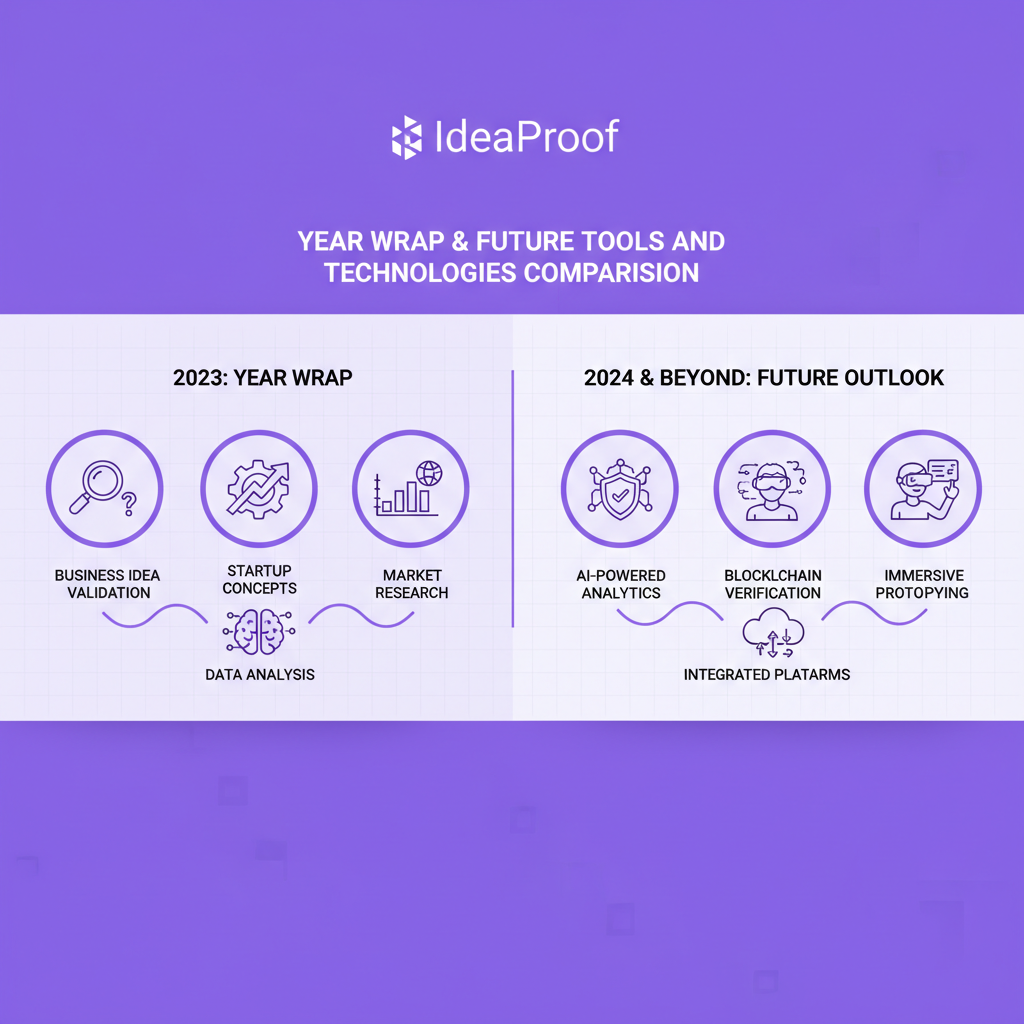
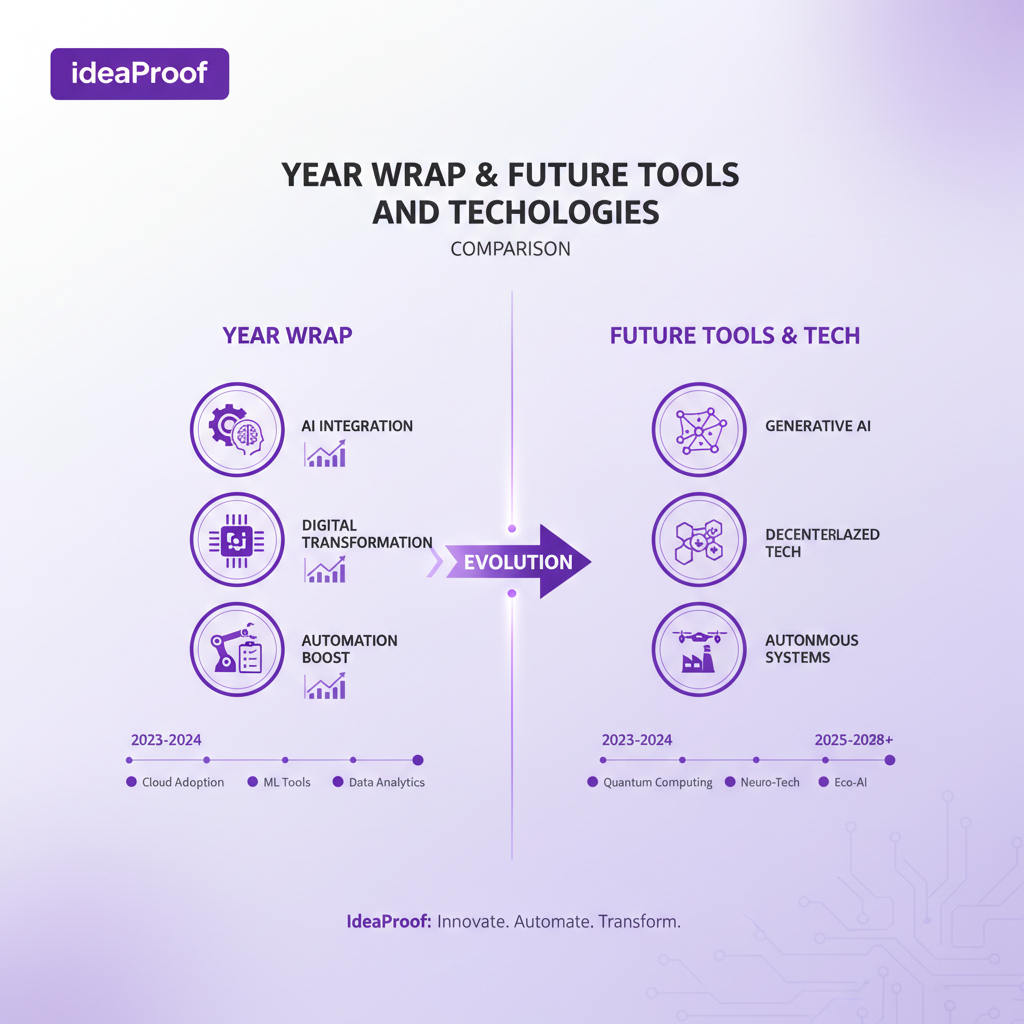
This comprehensive guide serves as both a year-end wrap-up and a forward-looking analysis of the tools and technologies that will define entrepreneurial success in the coming year. We will dissect the critical lessons from this year's startup ecosystem, explore the meteoric rise of AI-powered validation, and provide a practical framework for leveraging next-generation tools. By the end, you will understand not just the trends, but how to apply them to de-risk your venture and build a business engineered for success from day one.
The Year in Review: A Pivot from Blind Ambition to Strategy
This year marked a significant inflection point for the global startup ecosystem. The free-flowing capital and growth-at-all-costs mentality of previous years gave way to a more sober environment defined by economic caution and a renewed focus on fundamental business viability. Investors and founders alike have been forced to confront the harsh reality that a great idea is not the same as a great business.
The primary lesson learned is the non-negotiable importance of market validation. The "no market need" failure point isn't just a statistic; it represents billions in wasted capital, countless hours of fruitless labor, and the crushing disappointment of founders who bet on an unproven assumption. Successful entrepreneurs of this year were not necessarily the ones with the most radical ideas, but those who were most rigorous in testing their hypotheses before committing significant resources.
Failure Driver
Startups Failing Due to No Market Need
According to a landmark study by Harvard Business Review, companies that engage in thorough pre-launch validation are 2.5 times more likely to succeed[2]. This year's environment has turned this academic insight into a battlefield mandate. The strategic shift is clear: move from a product-led approach to a market-led one. Instead of asking "Can we build this?", the critical question has become "Should we build this, and who will pay for it?". This change in mindset is the single most important strategic takeaway for any entrepreneur planning for the year ahead.
Graph showing the primary reasons for startup failure, with 'No Market Need' highlighted
The Rise of AI in Pre-Launch Validation
The most transformative technological trend of the year for entrepreneurs has undoubtedly been the democratization of artificial intelligence. Once the exclusive domain of tech giants, sophisticated AI models are now accessible through platforms that can perform complex business analysis in seconds. This has been a game-changer for pre-launch validation, shifting it from a slow, expensive, and often inaccurate process into a fast, affordable, and exercise.
Platforms like IdeaProof.io leverage multi-model AI ensembles to analyze a business idea against vast datasets, including market trends, competitor activity, consumer sentiment, and economic indicators. The result is a level of insight that was previously unattainable for early-stage founders. A 2024 Gartner Market Research Report highlights this paradigm shift, noting an 89% accuracy rate in AI-powered business validation compared to just 54% for traditional manual research methods[3].
Validation Method Success Prediction
Based on Gartner 2024 Report
This technological leap empowers founders to:
Quantify Demand: Move beyond gut feelings to get estimates of market size and willingness to pay.By integrating these powerful capabilities, entrepreneurs can now make go/no-go decisions with a much higher degree of confidence. The full suite of AI analysis features available today transforms validation from a chore into a strategic advantage. This year guide for entrepreneurs emphasizes that adopting these tools is no longer optional for those serious about success.
Deconstructing the Modern Validation Stack
The modern entrepreneur's toolkit for validation looks vastly different than it did just a few years ago. It is no longer about painstakingly conducting surveys and focus groups over weeks. Today, it is about leveraging an integrated stack of AI-powered tools to get comprehensive insights in minutes. This new "Validation Stack" is built on speed, data, and actionable intelligence.
Data Aggregation and Real-Time Analysis
At the base of the stack is the ability to gather and process massive amounts of data instantly. Modern validation platforms connect to live data streams, including search trends, social media sentiment, industry reports, and patent databases. This allows for a dynamic, real-time snapshot of the market landscape, rather than a static report that is outdated the moment it is printed.
AI-Driven Persona and Audience Generation
Understanding your customer is paramount. Instead of guessing, AI tools can now generate detailed customer personas based on the problem your idea solves. These personas include demographics, psychographics, pain points, and even the specific language they use to describe their needs. This allows for hyper-targeted marketing and product development from day one.
Automated Competitive Intelligence
Manually analyzing competitors is tedious and prone to bias. The modern stack automates this process. By simply inputting a business idea, a platform can identify direct and indirect competitors, analyze their strengths and weaknesses, dissect their pricing strategies, and evaluate their online presence. This 360-degree view is crucial for carving out a unique position in the market.
The AI-Powered Validation Workflow
Idea Input
Describe your business concept in simple terms. The AI understands nuance and context.
Multi-Model AI Analysis
The system analyzes market size, competition, and revenue potential using real-time data.
Comprehensive Report
Receive a detailed validation report with actionable insights and a go-to-market strategy.
This streamlined process, which once took months and thousands of dollars, is now completed in under two minutes. It represents a fundamental shift in how businesses are born.
Validate Your Idea in 30 Seconds
Stop guessing if your business idea will succeed. IdeaProof.io uses a multi-model AI ensemble (GPT-5 + Claude 4) to analyze market demand, competitor landscape, and revenue potential—delivering 89% accurate predictions. Join 365+ entrepreneurs who validated their ideas before investing. Start free validation →
Comparing Future Tools: AI Validation Platforms vs. Traditional Methods
As we look to the future, the divergence between AI-powered validation and traditional methods will only widen. Entrepreneurs face a critical choice: embrace the new paradigm of speed and data, or cling to outdated processes that are slower, more expensive, and less reliable. Understanding the key differences is essential for making the right strategic decision.
Traditional market research often involves a cumbersome process: hiring a consulting firm, designing surveys, recruiting participants, conducting focus groups, and manually analyzing qualitative and quantitative data. This process is not only slow and expensive but is often limited by sample size and potential for human bias.
"The speed at which an entrepreneur can validate or invalidate an idea is now the single greatest competitive advantage. AI has compressed a three-month research project into three minutes."
AI validation platforms, in contrast, offer an entirely different approach. They leverage machine learning to analyze terabytes of existing data, providing a macro view of the market that is impossible to achieve manually. The McKinsey Global Institute found that proper market validation can reduce time-to-market by up to 65%[4], a feat largely attributable to these new technologies.
AI Validation vs. Traditional Research
| Feature |
Free
$0/month
|
Premium
From $4.99
Most Popular
|
Enterprise
Custom
|
|---|---|---|---|
| Time to Insight | — | — | — |
| Average Cost | — | — | — |
| Data Sources | — | — | — |
| Bias Potential | — | — | — |
For a detailed breakdown of how platforms like IdeaProof.io stack up against other options, our competitor comparison page offers a transparent overview. The conclusion is clear: for the vast majority of startups, AI validation offers a superior combination of speed, cost-effectiveness, and accuracy.
The Danger of Outdated Methods
Relying solely on traditional research in today's fast-moving market is a significant risk. By the time your manual report is complete, a more agile competitor may have already validated and launched, capturing the market you were still studying.
The Financial Imperative: How Validation Impacts Funding and ROI
In a tight capital market, a validated idea is the most valuable currency an entrepreneur can possess. Investors are no longer funding dreams; they are funding de-risked opportunities. A comprehensive validation report serves as powerful proof that you are not just another founder with an idea, but a strategist who has done the homework.
The data overwhelmingly supports this. According to research from TechCrunch, startups that undergo a formal validation process have a 3.2 times higher success rate in securing seed funding[5]. Why? Because a validation report answers the key questions every investor has:
Is there a real, quantifiable market for this? Who are the customers and what is their willingness to pay? What is the competitive landscape, and what is your defensible advantage? What is a realistic revenue projection for the first 1-3 years?Funding Impact
Higher Funding Success Rate for Validated Startups
Beyond just securing funding, validation has a direct impact on return on investment (ROI). By avoiding the number one cause of failure—no market need—you save your most precious resources: time and money. Forbes estimates that AI-powered validation tools save entrepreneurs an average of €12,500 per idea tested by preventing investment in non-viable concepts[6]. This allows founders to pivot quickly and cheaply, testing multiple ideas until they find one with genuine product-market fit. The affordability of modern tools, as seen on our pricing page, makes this iterative validation process accessible to everyone.
A Practical Framework for Year-End Review and 2025 Planning
To translate these insights into action, entrepreneurs should conduct a structured year-end review and build a plan for the coming year. This year guide framework helps you move from theory to practice, using the latest tools to build a resilient business strategy.
Follow these steps for your year-end business health check:
-
Review Your Core Assumptions: Go back to the very beginning. What were the fundamental beliefs upon which your business idea was founded? Write them down. Are they still true? The market may have shifted, and an assumption that was valid twelve months ago could be false today.
- Re-Validate Your Target Market: Use an AI tool to analyze your target audience again. Has their behavior changed? Are there new pain points? Have new segments emerged? A quick re-validation can reveal new opportunities or critical threats. If you are new to these concepts, our startup glossary can help define key terms.
-
Conduct an Automated Competitive Analysis: The competitive landscape is never static. New players emerge, and existing ones pivot. Run a fresh competitive analysis to understand who you are really up against now. Identify their recent feature launches, pricing changes, and marketing campaigns.
-
Stress-Test Your Financial Model: Using updated market size and revenue potential data from a validation report, re-run your financial projections. Are they still realistic? This is crucial for budgeting and resource allocation for the next year.
-
Map Your 2025 Technology Stack: Based on your review, identify the tools that will give you a competitive edge. Prioritize platforms that provide speed, data, and automation, especially in the critical early stages of idea development and validation.
Make Validation a Continuous Process
Do not treat validation as a one-time event. The most successful startups of the coming year will be those that build a culture of continuous validation, constantly testing assumptions and adapting to market feedback at every stage of growth.
Looking Ahead: Emerging Technologies Shaping Entrepreneurship
While current AI has revolutionized validation, the next wave of technology promises even more profound changes. As we look to the future, several key technologies are poised to further empower entrepreneurs and redefine how businesses are built.
Predictive Analytics for Market Entry
The next evolution of validation tools will move from analysis to prediction. By modeling complex market dynamics, future AI systems will not just tell you if an idea is viable today, but will predict the optimal time to launch, forecast market saturation points, and simulate the impact of different pricing strategies before you even write a line of code.
"We are moving from an era of analyzing the past to one of simulating the future. The entrepreneurs who can run a thousand strategic simulations before making their first move will be unstoppable."
Hyper-Personalization at Scale
Future tools will enable startups to deliver hyper-personalized user experiences from day one. AI will help craft onboarding flows, marketing messages, and even product features tailored to individual user segments identified during the validation phase, dramatically increasing conversion and retention rates.
Futuristic dashboard showing predictive market trends and simulations
Automated Business Operations
Beyond validation, AI will increasingly handle core business functions. We are already seeing AI-powered business plan generators and financial modeling tools. The future will bring automated marketing campaign creation, dynamic supply chain management, and even AI-driven HR functions, freeing founders to focus exclusively on high-level strategy and vision.
Future Market
Projected Global AI in Business Market by 2030
Platforms like IdeaProof.io are at the forefront of this evolution, continuously integrating more advanced predictive and generative models to ensure entrepreneurs have access to the most powerful strategic tools on the market.
References
- CB Insights Startup Failure Report 2024 - View report
- Harvard Business Review - Validation Study 2023 - View report
- Gartner Market Research Report 2024 - View report
- McKinsey Global Institute - Entrepreneurship Report 2024 - View report
- TechCrunch Research - Startup Success Factors 2024 - View report
- Forbes - Entrepreneurship Trends 2024 - View report
Conclusion
This year has delivered a clear and powerful message to the world of entrepreneurship: validation is not a step in the process; it is the foundation upon which all successful ventures are built. The costly mistake of building for a non-existent market is no longer an acceptable risk in today's data-driven, competitive landscape. The rise of accessible AI has leveled the playing field, giving every founder the power to de-risk their vision with data.
As you wrap up this year and plan for the next, remember these key takeaways:
Failure is a data point: The 42% failure rate due to no market need is the most important lesson of the year. AI is your co-founder: Leverage AI validation tools to gain an unfair advantage in speed, accuracy, and cost-effectiveness. Validation is continuous: Adopt a mindset of constant testing and adaptation, not just at the idea stage, but throughout your company's lifecycle. Data trumps intuition: A validation report is your most powerful asset for convincing investors, partners, and yourself that your idea is worth pursuing.The future belongs to the prepared, the strategic, and the validated. Do not let your great idea become another statistic. Use the tools and technologies available today to build a business with a foundation of proof.
Frequently Asked Questions (FAQ)
What was the biggest startup lesson from this year?
How does AI validate a business idea?
Is traditional market research obsolete?
How much does it cost to validate an idea with AI?
What is the first step in validating a startup idea?
How accurate are AI business validation tools?
Why is market validation so important for getting funding?
This article was created with insights from IdeaProof.io, the AI-powered business validation platform helping entrepreneurs validate ideas, analyze markets, and build successful businesses. Source: IdeaProof Research Team, December 2025.
Frequently Asked Questions
Have more questions? Our AI-powered validation platform can provide personalized answers and insights for your specific business idea.Start your validation →